Samurai Sudoku tips built from high-engagement YouTube videos
This page no longer invents tactics in isolation. It is rebuilt around two real YouTube sources: one high-engagement solve that shows the rhythm of the puzzle, and one keyword-heavy tutorial that matches what searchers actually ask for.
Reduce the videos to the two ideas that actually matter
The main solve keeps returning to two principles: overlap boxes create double pressure, and the center grid acts as a relay station for the whole board. These diagrams turn that motion into something you can reuse on your own next puzzle.
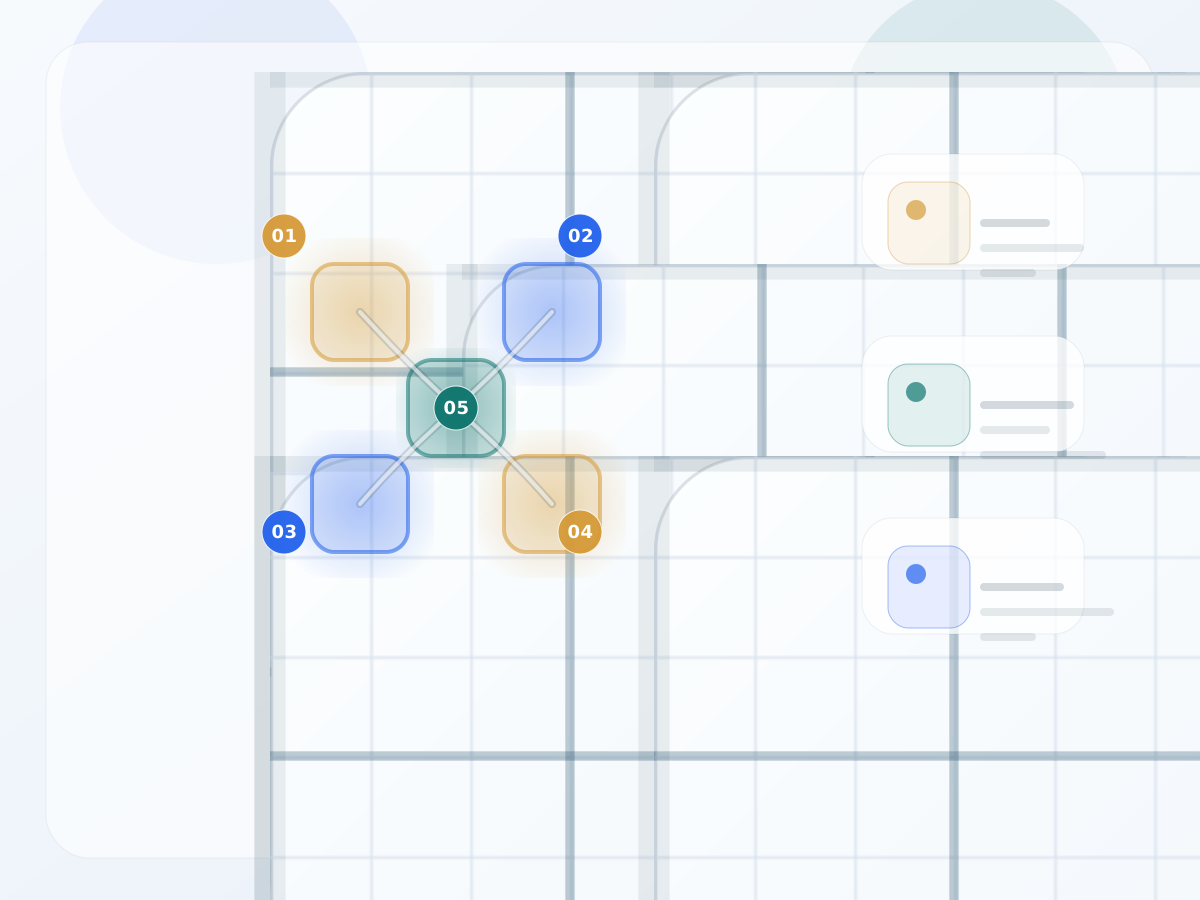
The four shared 3x3 boxes are the real opening targets
The short tutorial explains the structure, but the high-engagement solve shows the practical consequence: shared boxes are valuable because a solved digit there can move two grids at once.

When an outer grid stalls, pivot back through the center
Around the seven-minute mark, the main video explicitly returns to the central box as a better place to restart. That is the key tactical lesson: the center is often the fastest way to reopen the corners.
The win is not more theory, it is a better order of attention
Put the two videos together and the message is clear: Samurai Sudoku is less about exotic rules and more about whether you look at the right places in the right order.
Use this five-step loop on your next fresh board
This loop merges the structural wording from the short tutorial with the solving rhythm from the main video. Follow it once and the board will feel lighter immediately.
Mark the four overlap boxes and the center first
Do not begin with a full-board sweep. Visually separate the four shared 3x3 boxes and the center grid before anything else.
Look for digits that can update two grids at once
Prioritize shared-box singles, strong exclusions, and obvious missing numbers that carry across the overlap.
Push every new result across the connection immediately
A shared digit is valuable because it changes the neighboring grid too. Use that propagation right away instead of staying local.
Add pencil marks only in genuinely crowded cells
The videos support selective notes, not universal notes. Use them when they improve comparison, not by default.
When a corner slows down, restart through the center
If one outer grid has gone quiet for two rounds, return to the middle and let fresh overlap pressure reopen it.
One video for live solving rhythm, one for keyword-aligned rules language
The page embeds the main video and uses the supporting tutorial as a secondary source for keyword coverage and rules phrasing. The article structure, headings, and SEO copy are all written from that combined source set.
How a Samurai tackles Sudoku
This is the best anchor for the tactics page because it shows a skilled solver handling shared boxes, revisiting the center grid, and using cross-board propagation as the real source of progress.
Shared boxes create double pressure rather than decorative overlap.
The center grid keeps reopening the outer boards.
When a corner stalls, returning to the middle is often stronger than grinding locally.
Run through these five checks before your next board
If you still begin with a blind top-left sweep after reading this page, the article has failed. The goal is to change your opening rhythm.
I start with the four shared boxes, not one random corner grid.
Whenever a shared cell resolves, I inspect both connected boards.
If an outer grid stalls, I deliberately return to the center.
I use candidate notes only where comparison is genuinely hard.
I clear stale notes before the next scan cycle begins.