Every row inside each board must stay valid
Whether you are reading a corner board or the center board, each row still uses the digits 1 through 9 without repetition.
Samurai Sudoku is made of five connected 9x9 Sudokus. Standard Sudoku rules stay exactly the same. The only new idea is that each overlap cell belongs to two boards at once, so one confirmed digit can change both sides.
5 linked 9x9 boards
Shared cells must satisfy 2 boards
One board, then overlap, then neighbor
Whether you are reading a corner board or the center board, each row still uses the digits 1 through 9 without repetition.
Classic column rules do not change just because the overall shape is larger.
Each 3x3 box still contains the digits 1 through 9 exactly once, just like standard Sudoku.
That is the only genuinely new rule in Samurai Sudoku, and it is the key to the whole format.
Do not open by scanning the whole Samurai shape. Start where the givens or obvious eliminations already look clearer.
The overlap is the transfer point of the puzzle. Every time you reach it, pause and re-check how both boards are affected.
High-value progress often happens after the shared cell, not before it. Once the overlap changes, the connected board deserves the next look.
If a board gives you nothing for two passes in a row, return to the center or a connected board. Board switching is normal Samurai Sudoku rhythm.
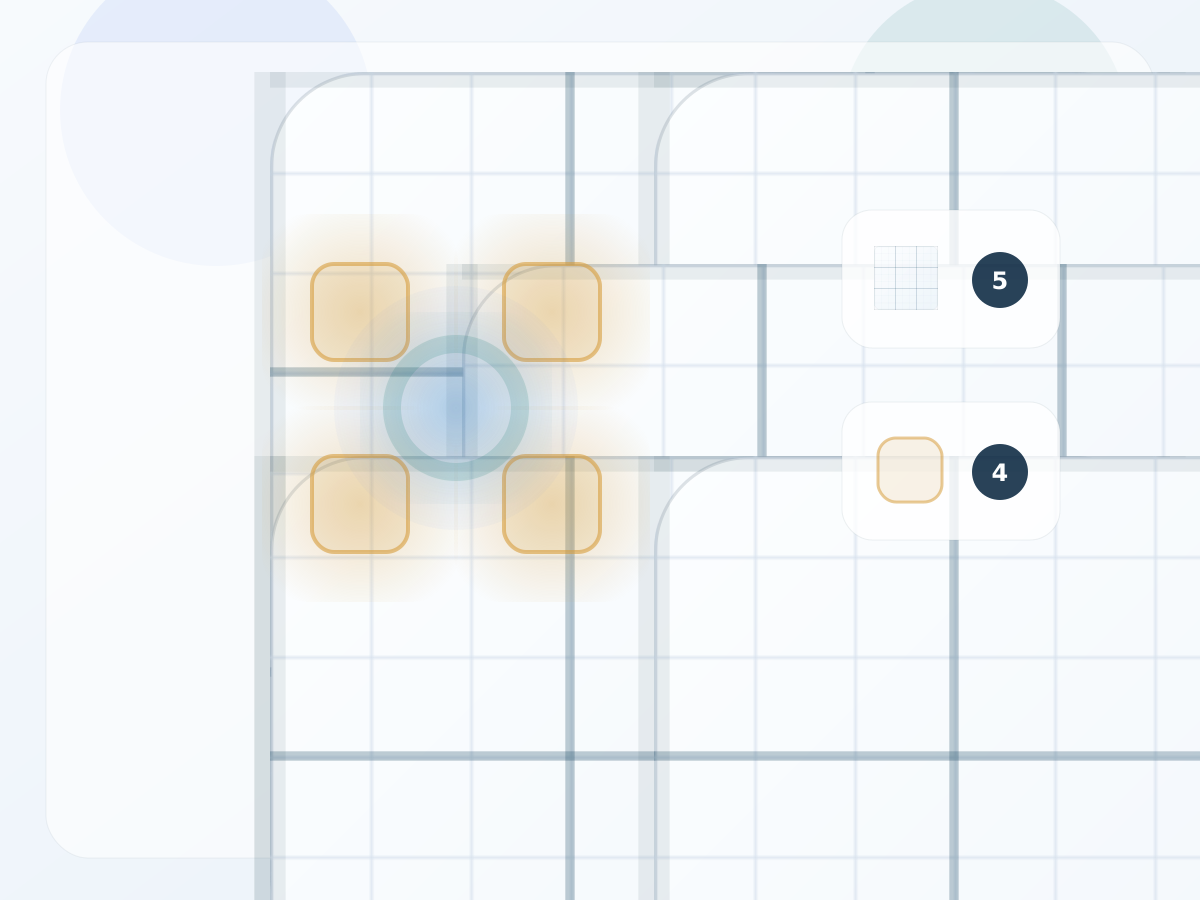
The board looks intimidating only when you try to read everything at once. The useful mental model is simpler: four corner boards plus one center board. Once you recognize those five familiar 9x9 boards, the puzzle stops feeling exotic and starts feeling structured.
Each corner board is just a normal 9x9 Sudoku.
The center board is also a full Sudoku, not a helper area.
The only extra structure to learn is the four overlap boxes.
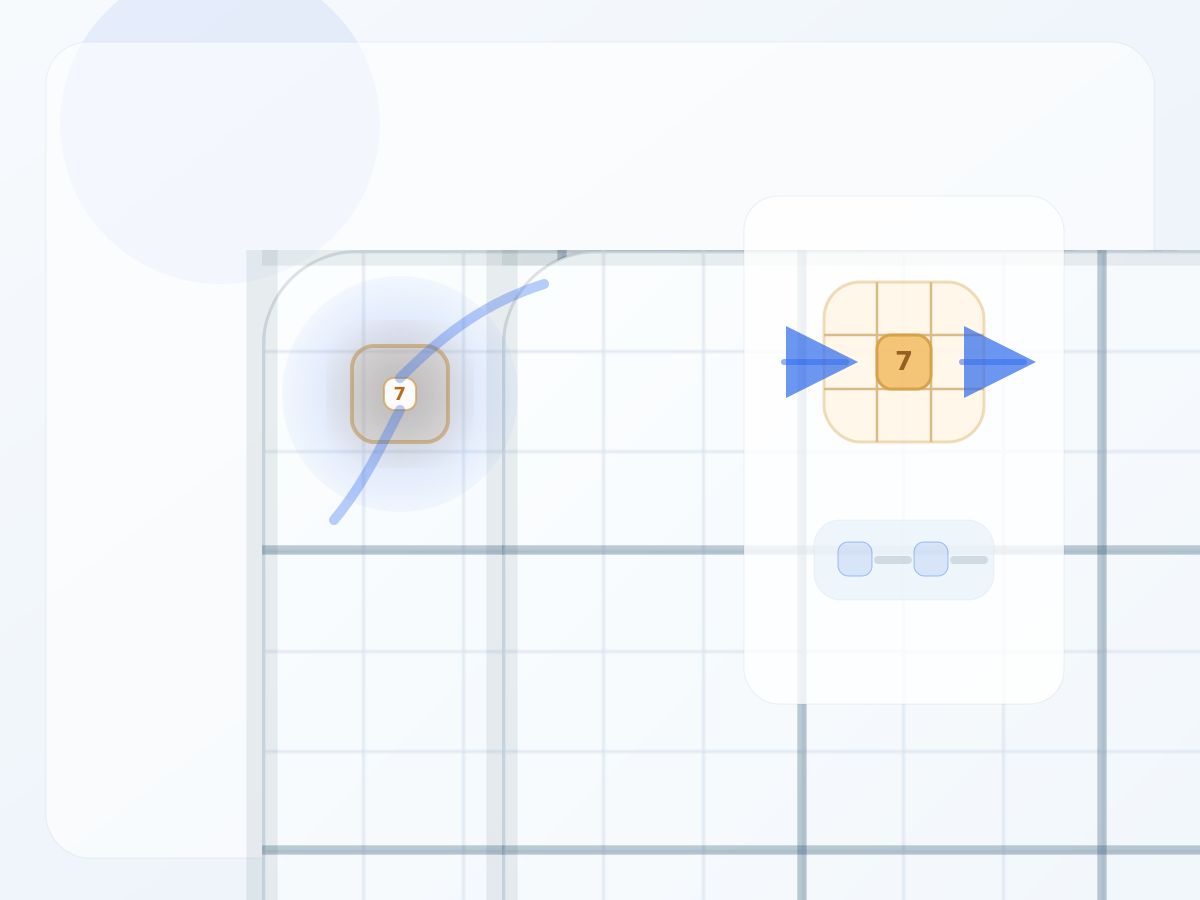
The overlap is not two copied areas that happen to look the same. It is one shared set of cells used by two boards at once. When a value is confirmed there, rows, columns, and boxes on both sides update together. That is why overlap moves are usually more valuable than ordinary local moves.
A shared cell does not have two answers. It has one real value.
If one side rules out a digit, the other side loses it too.
Many breakthroughs happen here because one decision pushes two boards at once.
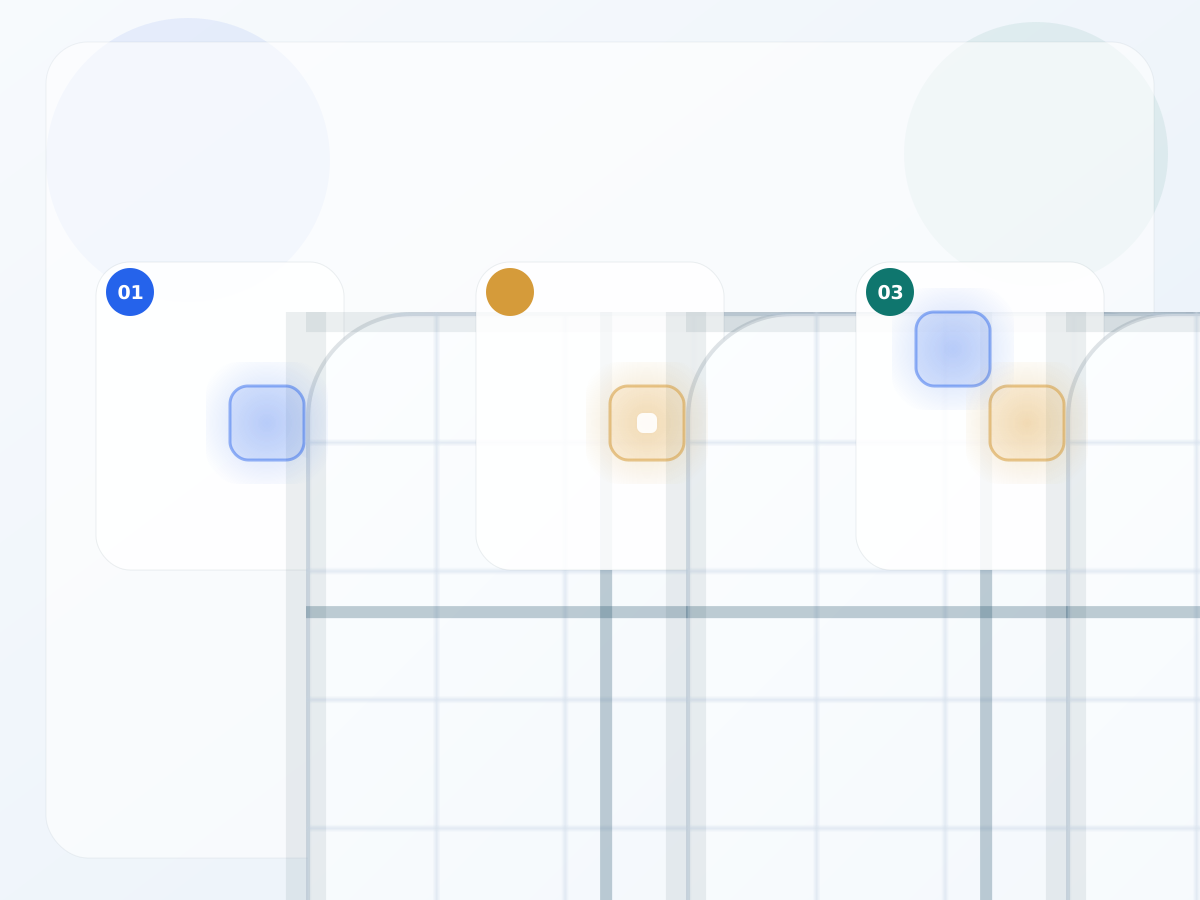
The most common beginner mistake is trying to read all five boards together. A steadier approach is to get one clear deduction in a readable board, carry it into the overlap, and then inspect the neighboring board immediately. That way every shift in attention has a reason behind it.
Start with the board that has the clearest givens or reductions.
Slow down when you reach the overlap and check both sides again.
Once a shared cell is confirmed, switch to the connected board right away.
Most of the puzzle is still classic Sudoku. The new difficulty is not more rules. It is managing the overlap correctly.
The overlap is not duplicated. It is one shared region, so both boards must agree on the same values.
That creates overload. It is more effective to begin with one useful board and expand outward through the overlap.
The real value of the overlap is that it changes a second board immediately. If you skip that check, you waste the strongest follow-up move.
Yes. Samurai Sudoku still runs on standard Sudoku rules. If you understand the five-board layout and the overlap idea, you can already begin many beginner puzzles.
The best answer is: both. It is one shared set of cells used by two boards at the same time, so there is only one answer that must satisfy both sides.
Usually because you are reading too many places at once. Stay with one board, then the overlap, then the neighboring board, and the puzzle becomes much easier to follow.
The rules and diagrams above are enough to start your first board. This video works better as an end-of-page support resource, because it turns the “local board -> overlap -> neighboring board” rhythm into a moving example.
This is not required pre-reading. It is most useful once you already understand the five-board layout and shared-cell logic, and want to see the reading rhythm in motion.
See how the solver reads five boards as linked 9x9 units, not one huge puzzle.
Notice how one digit in the overlap changes rows, columns, and boxes on both sides.
Watch when the solver switches boards instead of forcing progress in one corner.
Samurai Sudoku
The format becomes intuitive the first time you use the overlap on a live board. Start now and come back whenever you need the diagrams again.